
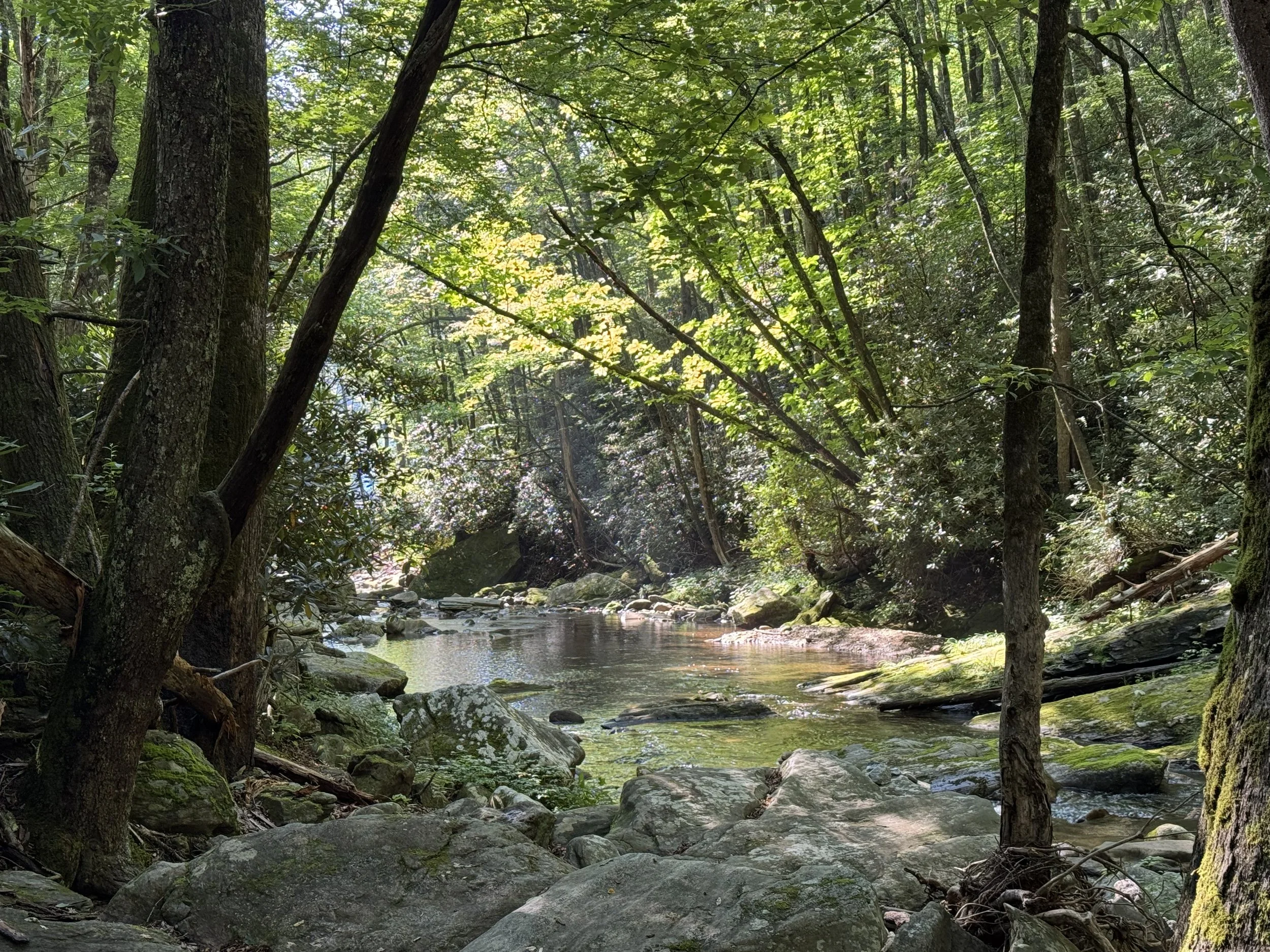
Think back to the last time something stopped you in your tracks. Light in the trees. A shadow across a road. A face in a crowded room.
Those moments are where paintings start. But you won’t notice them if your mind is full of noise.
Garbage in, garbage out. We all know it. But how much responsibility do we take, as artists, for what we feed our minds? What you watch, read, scroll through, eat, and surround yourself with comes into the studio with you. It sits down at the easel beside you. Take ownership of what your operating system consumes.
Two things are worth practicing.
1. Cut out the garbage.
Get serious about distraction, physical, mental, and creative. Notice what leaves you drained, scattered, angry, or so busy comparing yourself to others that you don’t feel like making anything.
I believe your growth as an artist a year from now will be tied directly to what you allow in. Yes, that includes this post, if it’s taking the place of good painting time.
It’s easy to lose an hour watching someone else paint when you meant to spend that hour painting. Even good material becomes a distraction if it keeps you from your own work.
You don’t have to finish every video, follow every argument, or answer every notification. Decide what deserves your attention. Then guard the time you’ve set aside to paint.
2. Know what moves you. Then find out why.
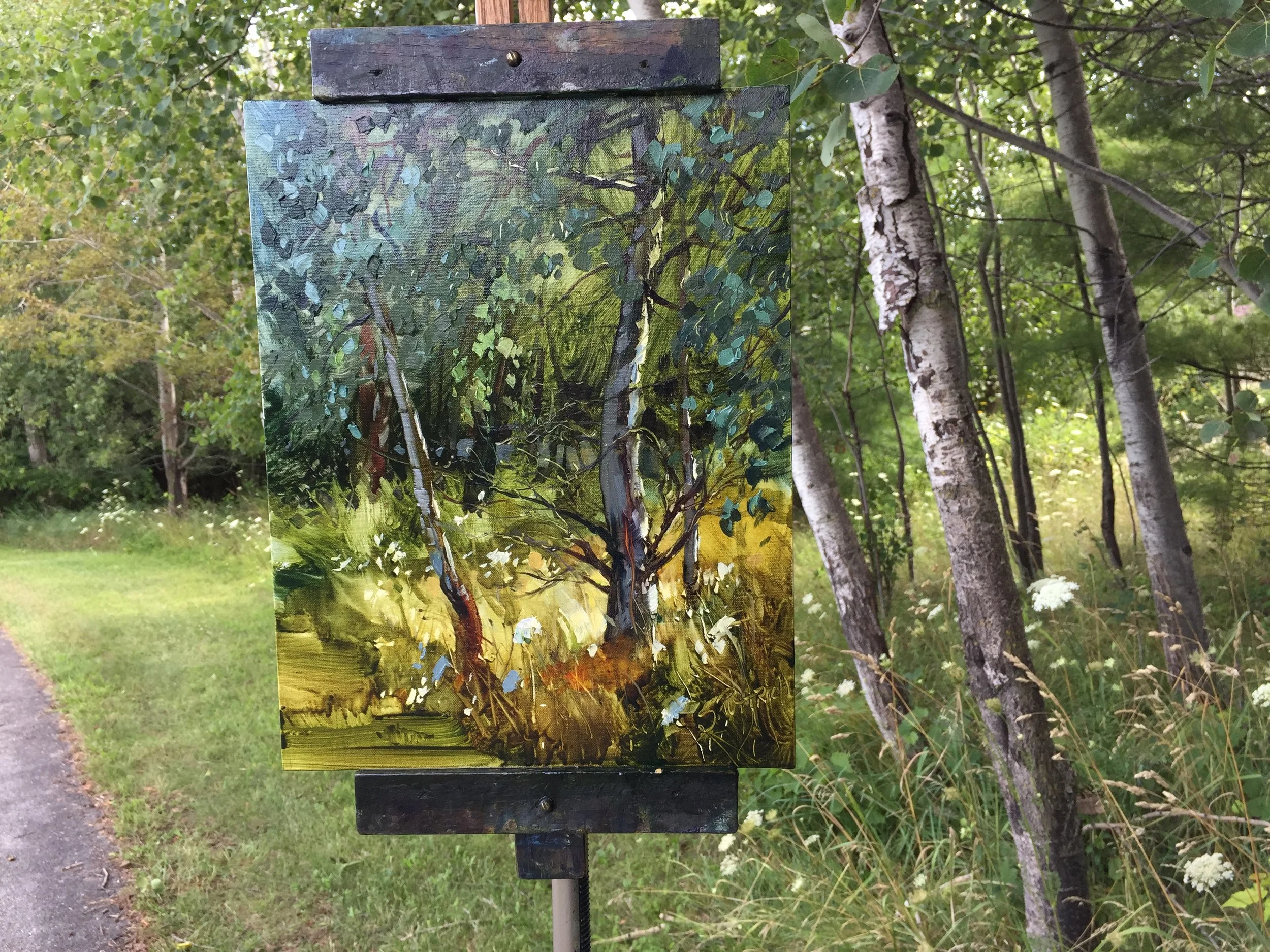
Cutting out the garbage is half the job. The other half is feeding yourself well.
When something stops you, stay with it a little longer. Before you take the photo and walk on, study what’s happening.
For me it’s often a backlit or sidelit scene. Light coming through trees in the woods. A few bright shapes held together by a larger dark.
I’m also drawn to things I can feel but can’t easily paint. Wind turning leaves and bending branches. Fog softening the distance. Silence. The smell of damp woods. A cool patch of shade, then the warmth of sunlight on my shoulders.
So I ask questions. What is the light doing to those shapes? Which edges disappear? What tells me the air is cool? How little detail can I use and still carry that feeling into a painting?
Then comes the bigger question. Why these scenes?
Part of it, I think, is the sense that there’s more to discover. Something was there all along. Then the light changed, or I paid closer attention, and I saw it. I can see enough to get interested, and a few more steps might show me something else. Environmental psychologists Rachel and Stephen Kaplan called that quality “mystery.” I know it as the wonder that sent me exploring as a boy. I still want to see what’s through those trees.
The moving leaves and shifting light hold my attention without asking much of me. The Kaplans’ Attention Restoration Theory calls this “soft fascination.” For me it comes with the cool air, the smell of the woods, and the warmth when I step into the sun. As I slow down, I feel grateful. Grateful to be there, to be able to see it, to have another day to paint. My faith is part of that. I find myself thanking God for something I might have missed if I’d hurried past.
These scenes give me hope. There is still something to discover in a place I thought I knew. After decades at the easel, that matters.
Painting brings together the curiosity I had as a boy, the skills I’ve worked hard to build, and a growing love for the world God made. That love reaches toward the person who will someday stand in front of the painting. I want to share what made me stop, hoping they’ll feel some of that wonder, notice something in their own lives, and find a reason to be grateful too.
The better I understand what moves me, the better I can decide what belongs in the painting.
So go looking for what feeds your eye and gives you something to think about. Then take the time to understand why it matters to you.
What stopped you lately? Do you know why?